
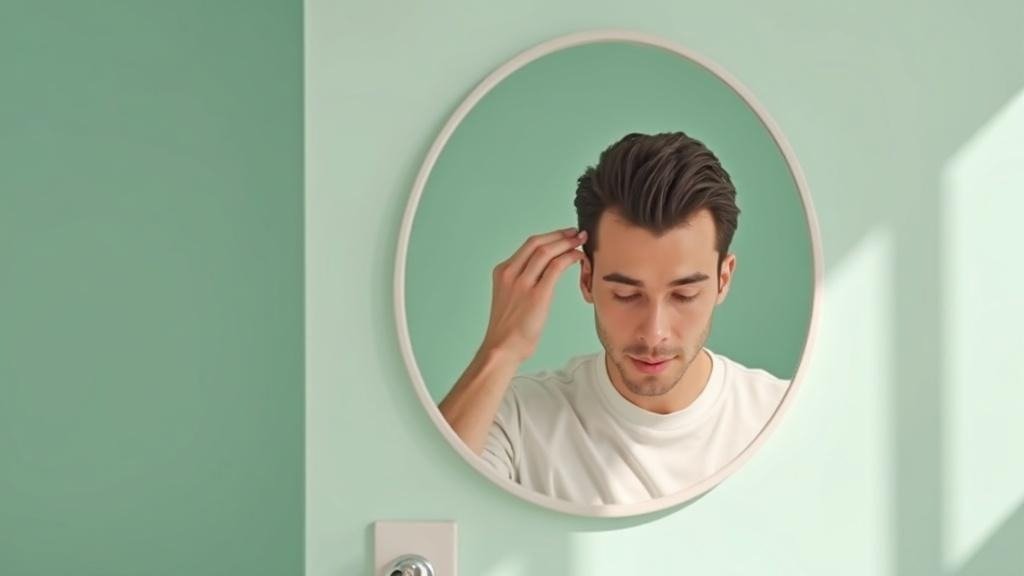
My hairline started receding noticeably around age 28. I did what most people do: I panicked, Googled everything at 1am, and ended up more confused than before. Finasteride or minoxidil? Both? Which brand? What stage am I even at? This list is what I wish existed when I started.
These ten options cover the full picture, from figuring out where you actually stand to the treatments most doctors and online communities keep circling back to.
1. HairLine AI (Free Norwood Staging Tool)
Before spending money on anything, you need an honest read of your situation. HairLine AI is a browser-based tool that takes a photo from your webcam or camera roll, maps your facial structure using computer-vision technology, and classifies your Norwood stage using a high-end vision model. It also spits out a rough graft count and estimated transplant cost if you’re at a stage where surgery might be worth thinking about.
No account. No credit card. Takes about 90 seconds.
I found it genuinely useful as a reality check before my first dermatologist appointment. It doesn’t prescribe anything and isn’t a substitute for a clinician, but knowing I was probably a Norwood 3 rather than guessing at a 2 or a 4 helped me ask smarter questions. Think of it as orientation, not diagnosis.
2. Oral Finasteride (Generic, ~$10-$30/month)
The most studied option for male androgenic alopecia. Finasteride 1mg taken daily blocks DHT conversion, and most men who respond to it see measurable slowing or partial regrowth within 6 to 12 months. The catch: it requires a prescription, results disappear when you stop, and a minority of users report sexual side effects. Talk to a doctor, not Reddit, before starting.
3. Minoxidil 5% (Generic OTC, ~$8-$15/month)
The other pillar. Minoxidil works differently from finasteride, it increases blood flow to follicles and extends the growth phase rather than blocking hormones. Available over the counter in liquid or foam. Cheap. Works on the crown better than the hairline. Using both together is the most common combination a dermatologist will suggest.
4. Hims
Hims is the only major telehealth platform currently offering topical finasteride, which matters if you’re concerned about systemic side effects. They also carry oral finasteride, oral minoxidil, topical minoxidil, and combination kits. Pricing varies but they regularly run intro deals. The interface is slick. Prescriptions come through licensed clinicians via their platform.
5. Keeps
Keeps is specifically hair-loss focused, which means no distractions. They offer finasteride and minoxidil at prices that get more reasonable on a 3-month plan. Shipping runs around $5. The onboarding process includes a photo review by a clinician before they write anything. A good pick if you want a no-frills monthly cadence without paying premium brand prices.
6. Roman (Ro)
Roman offers generic oral finasteride and minoxidil solution. No foam, and no topical finasteride as of this writing. Their strength is in the broader Ro health ecosystem if you’re already using them for something else. Straightforward, licensed clinicians, no surprises.
7. Happy Head
Happy Head writes prescriptions for custom compounded topical formulas, meaning your finasteride and minoxidil can be combined into a single solution at specific concentrations. This is appealing for people who want to avoid daily oral finasteride but still want Rx-strength treatment. Custom compounding is real medicine, but it sits outside standard FDA approval pathways, so understand what that means before you start.
8. BosleyRx / Bosley
Bosley has decades of transplant history behind it. Their Rx arm lets you access finasteride and minoxidil through the same brand if you’re eventually considering surgical options. Useful if you want continuity between your medical treatment and any future consultation for a procedure.
9. Ketoconazole Shampoo (OTC or Rx)
Ketoconazole at 1% to 2% concentration has some evidence suggesting it reduces scalp DHT locally. It’s not a replacement for finasteride or minoxidil, but plenty of dermatologists recommend it as an add-on. The OTC version is inexpensive and widely available.
10. Derma Rolling + Microneedling (At-Home Adjunct)
A 0.5mm to 1.5mm derma roller used weekly has shown in small studies to improve minoxidil absorption and independently stimulate follicle activity. The evidence base is modest but growing. Cost is low. Used alongside minoxidil, some people see better results than with minoxidil alone. Don’t use it on irritated or inflamed scalp.
A note before you start anything: finasteride carries real risks for a minority of users, minoxidil requires lifetime commitment, and what works at Norwood 2 looks very different from what makes sense at Norwood 5. An independent dermatologist, not a telehealth quiz, should guide your actual treatment plan.
Common Questions
Does it matter whether you start with finasteride or minoxidil first?
For most men with androgenic alopecia, dermatologists typically suggest starting both at the same time rather than sequencing them. Finasteride targets the hormonal cause while minoxidil works on follicle activity directly. Starting together gives you a faster read on combined response, though your clinician may have reasons to do one first based on your health history.
Can Hims or Keeps actually replace a dermatologist visit for this?
For straightforward male pattern hair loss at an early Norwood stage, a telehealth platform can get you a legitimate prescription from a licensed clinician. What they cannot do is examine your scalp in person, rule out other causes like alopecia areata or scarring conditions, or order a biopsy. If your shedding is sudden or patchy, see a dermatologist in person first.
Is Happy Head’s compounded topical finasteride as effective as the oral pill?
There is no large-scale head-to-head trial comparing compounded topical finasteride to oral finasteride 1mg. Smaller studies suggest topical application reduces scalp DHT with less systemic absorption, which appeals to men worried about side effects. Whether that translates to equal hair retention over years is genuinely not settled yet.
How long before you can tell if minoxidil is working or not?
Most dermatologists put the honest evaluation window at six months of consistent daily use. Some men see increased shedding in weeks two through eight, which is normal follicle cycling and not a sign of failure. Judging results before the six-month mark, especially during that early shed phase, leads most people to quit too soon.
If you use HairLine AI to check your Norwood stage, how accurate is that compared to a clinician’s assessment?
HairLine AI uses computer vision on a single photo, which means lighting, angle, and hair length all affect the output. A dermatologist examines scalp density, miniaturization under a dermoscope, and hair shaft diameter, none of which a photo captures. The tool is genuinely useful for a rough baseline and for tracking change over time, but treat the number as an estimate, not a clinical diagnosis.
Sources
- American Academy of Dermatology, hair loss treatment guidelines (public clinical guidance)
- Norwood-Hamilton Scale, original classification system (published medical literature)
- Kaufman KD et al., finasteride clinical trials (peer-reviewed, widely cited)
- Olsen EA et al., minoxidil efficacy studies (Journal of the American Academy of Dermatology)
- Dhurat R et al., derma rolling and hair growth study (International Journal of Trichology, 2013)
