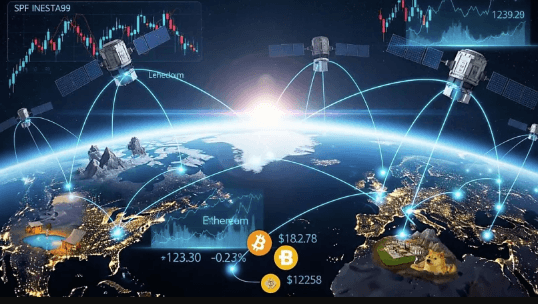
Technology is reshaping global finance through distributed ledgers, open APIs, and AI-driven optimization. Cloud-scale platforms enable scalable operations; real-time payments shrink settlement times and costs. Enhanced data fusion, verifiable provenance, and stronger governance improve transparency and accountability. Interoperability and resilient design create a secure, compliant ecosystem that supports global access and flexible collaboration. The result is a more efficient, trusted financial landscape—and the implications for strategy, risk, and regulation demand close attention.
What Technologies Are Driving Global Finance Today
Technologies shaping global finance today converge at the intersection of speed, transparency, and resilience. Distributed ledgers enable near-instant settlement, while open APIs unlock modular ecosystems. Artificial intelligence optimizes risk and pricing, and cloud-scale platforms support scalable operations. Cryptocurrency adoption and fintech partnerships catalyze access, aligning incentives for inclusion, efficiency, and strategic autonomy in a rapidly evolving financial frontier.
How AI, Data & Blockchain Redefine Risk and Transparency
AI, data, and blockchain reshape risk and transparency by integrating rapid data fusion, verifiable provenance, and adaptive modeling into the core of financial decision-making.
This approach strengthens AI governance, ensuring accountability and ethics while expanding competitive advantage.
Data lineage anchors trust, traceability, and compliance, enabling resilient risk management.
A strategic, data-driven vision empowers transparent, freedom-loving markets to innovate responsibly.
Real-Time Payments and Cross-Border Settlement: Faster, Cheaper, Safer
Real-time payments and cross-border settlement are converging into a leaner, more cost-efficient framework that accelerates value transfer while reducing settlement risk. Systemic data enables instantaneous liquidity routing, standardized messaging, and transparent cost models. Institutions pursue interoperability, resilience, and measurable efficiency gains, enhancing customer freedom to transact globally.
Real time payments unlock seamless cross border settlement through scalable, secure, vigilant networks and predictable timelines.
Governance, Regulation, and the New Financial Reality
The discourse centers on governance models shaping adaptive frameworks, regulatory sandboxes accelerating experimentation, data privacy as a trusted invariant, and cyber resilience as a operational baseline.
In this new paradigm, strategic clarity enables freedom through accountable, resilient innovation.
Frequently Asked Questions
How Will Fintechs Integrate With Legacy Banking Systems Efficiently?
Responding to how fintechs integrate with legacy systems, experts pursue standardized APIs and data models to reduce integration challenges and achieve data interoperability, enabling scalable architectures, governance, and strategic freedom for participants across regulated and agile environments.
What Ethical Risks Accompany Ai-Driven Financial Decisions?
Ai-driven financial decisions entail ethical risks: unintended bias, opaque decisioning, data privacy concerns, and the need for robust model governance. A visionary, data-driven approach balances freedom with accountability, guiding strategic safeguards and transparent evaluation for resilient, equitable finance systems.
How Will Quantum Computing Affect Cryptographic Security in Finance?
Quantum computing will modestly reshape cryptographic security in finance, enabling quantum hacking risks while elevating lattice cryptography as a robust countermeasure; strategic, data-driven leaders anticipate layered defenses, flexible governance, and freedom-enhancing innovation in resilient architectures.
Can Digital Currencies Replace Traditional Fiat Globally?
Digital currencies could reshape global finance, but universal replacement of fiat remains unlikely; gradual adoption, hybrid systems, and regulatory evolution will define trajectory, balancing innovation with stability and freedom-driven user empowerment across diverse economies.
See also: Technology Transforming Customer Engagement
What Skills Will Future Finance Professionals Need Most?
Ironically, the future finance professional must master future metrics, career adaptability, and ethics governance; they anticipate data-driven shifts, guiding strategic risk and opportunity while champions of freedom demand transparent, principled decision-making in an ever-evolving landscape.
Conclusion
The convergence of AI, data, and blockchain is no accident; it mirrors a deliberate, data-driven trajectory toward seamless trust and speed. As real-time payments shrink frictions and cross-border settlements align with verifiable provenance, institutions unlock scalable, resilient ecosystems. Governance and regulation, thoughtfully designed, safeguard integrity without stifling innovation. In this orchestrated coincidence, technology and policy reinforce each other, forging a strategic, global financial architecture that is faster, cheaper, safer, and more transparent than ever.